Why Do We Tend To Forget Things?

Source Of Image: https://www.dreamstime.com/female-person-standing-confused-blue-studio-image155765906

Memory is one of the fundamental components of a person’s life. Stuff from the deepest parts of our brain are often recalled for a variety of reasons, to reminiscing our childhood to recollecting a list of groceries. These are often the times when we tend to forget things, and it might be a little infuriating for some people. But, why do important things tend to slip off of our mind’s agenda? Let’s explore!

Memory, as most of us might know, is stored in the brain, the most important organ of our body. The brain consists of an intricate network of nerve cells which facilitate the transmission of messages in the form of electrical signals (That’s why people say that nerve cells are like the wires of our brain!). To understand untimely loss of memory, let us see the structure of a nerve cell, also called a neuron.

Source Of Image: https://pmgbiology.com/2015/02/18/nerve-cells-and-synapses-a-understanding-for-igcse-biology/

Messages in the form of electrical impulses are received by the neuron through the dendrites of another neuron. The impulse passes at a tremendous speed through the neuron, from the cell body to the axon to the end of tne cell, which is usually called the nerve endings. From there, the electrical impulses enter the adjoining neuron through its dendrites. This chain of events is continued until the message has been received by the relevant organ from the brain and an appropriate action has been taken.

Now, the neurons in the brain, as I had already mentioned earlier, form an intricate network connecting every part of the organ. Whenever we learn something new, a neurotic connection is established. It is important to note here that ‘learn’ doesn’t only mean a Mathematics problem or a Biology diagram. It could vary from a child learning to walk to smelling noodles for the first time. Anything that the brain doesn’t have previous record of is thereby stored as a neurotic connection.

However, sometimes these neurotic connections start to ‘decay’. They start to weaken and could ultimately fall apart. The cause of this could range from accumulation of toxins in the brain to old age. When neurotic connections get decayed, we tend to forget the memory associated with it. Experts say that interferences and decaying of memories makes it such that nothing we initially remembered is actually going to stay that way for a long time.

We must know that once we forget something completely, it is impossible to retrieve that memory. The reason being that nerve cells are the only cells in our body that cannot regenerate. So, a memory erased is completely gone. The only way to get it back would be to create a new memory, which could be formed by someone else telling you about experiences related to it. However, the new memory is highly unlikely to be similar to the original one.

Now, what if I told you that there are people who can remember things even from their early childhood, with remarkably precise details. Hard to believe? Well, let me tell you about a memory-related condition, which is just the opposite of our topic.

Hyperthymesia is a condition where a person remembers an abnormally large amount of their life, to such an extent that they can describe each day of their life with extreme precision. Scientists have stated that this condition could be due to certain parts of the brain including the hippocampus and temporal lobe being relatively larger in such individuals. This condition is extremely rare, with only 61 people confirmed having this condition in the whole world!

So, how was it? Did it make you forget why you read this (Hopefully not!)? Feel free to comment in the Comments section down below.

Author: Venkata Bhamidipati

Why Do Napthalene Balls Repel Cockroaches?

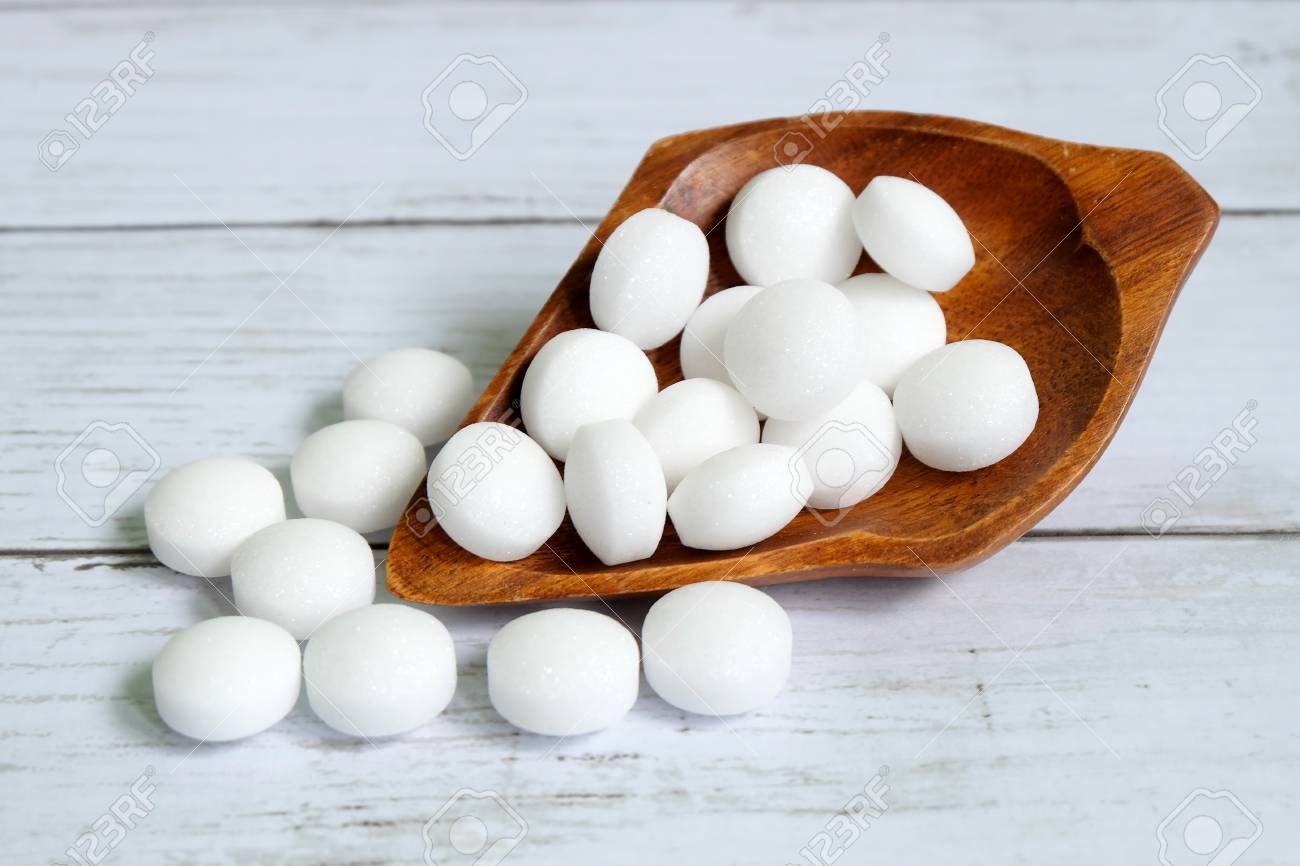
Source Of Picture: https://previews.123rf.com/images/faizalramli/faizalramli1801/faizalramli180100155/94496889-white-naphthalene-balls-on-white-wooden-background.jpg

Napthalene, those white, tablet shaped balls with an amazing smell (Well, atleast for me) have been used for many years to keep insects like cockroaches and moths away. Just toss some into a closed area and it will be insect-free until the ball sublimes. However, not many know as to why this substance has insect repellant properties. This is our topic for today.

Napthalene is a hydrocarbon i.e. it is completely made of carbon and hydrogen. Its chemical formula is C10H8 . It has the property to sublime i.e. to convert to the gaseous state from the solid state, bypassing the liquid state (If you want to know why substances sublime, check this article of mine- https://pcbpedia.home.blog/2019/10/19/why-do-substances-sublime/).

Napthalene can kill humans too if they are exposed to it for a long time, or if they ingest it. Now, let us see why insects are repelled by napthalene.

Considering the example of a cockroach, they too have a respiratory system like we do. Now, the fumes that are emitted by napthalene tend to block a cockroach’s respiratory tract, also called as tracheae. These fumes tend to disrupt the metabolism of the cockroach and start to suffocate it. As a matter of fact, napthalene is also used in the manufacturing of PVC (PolyVinyl Chloride), which is a very durable type of plastic usually used in making plastic carry bags. So, you can imagine how poisonous it could potentially be. In certain species, it is even known to be carcinogenic (cause cancer).

So, as the cockroach knows it is poisonous and that it might suffocate, it stays away. However, if it is trapped, it will succumb to the fumes, though we rarely see cockroaches lying dead near napthalene.

Coming to the other effects of napthalene, it has been known to cause a variety of dosorders like haemolytic anaemia, jaundice, nausea, diarrhoea among others.

So, how was it? Did it make you throw napthlene balls all over the place? Feel free to comment in the Comments section down below.

Stay Home, Stay Safe!

Note: This might be my shortest article I have written. Don’t worry, as longer articles are on the way.

Author: Venkata Bhamidipati.

Worst Enemy Of The Century- Coronavirus (Part Two)

This image has an empty alt attribute; its file name is photo-1583324113626-70df0f4deaab.jpg
Source Of Picture: https://unsplash.com/photos/w9KEokhajKw

Here I am again, with another article on my thoughts regarding the coronavirus, which has left the world tattered. As of this article, 48,97,567 people have been infected, 3,23,286 people have died and 16,88,630 people have recovered from this deadly disease (Source of figures: https://news.google.com/covid19/map?hl=en-IN&gl=IN&ceid=IN:en).

This time, I will be covering some points I missed out on my previous article [If you haven’t read my previous article, visit the link that follows: https://pcbpedia.home.blog/2020/04/26/worst-enemy-of-the-century-coronavirus/].

I will be looking into points including how prepared are we if we get hit be a second wave to the most asked question of when the pandemic will end. I would like to tell you that these are just my thoughts and should not be considered as facts until I mention a trustworthy source.

With this, sit back, relax and grab your…reading glasses [Don’t tell me you expected popcorn to be written there] as this is going to be another long article. So, let’s get started.

First of all, let us discuss as to how prepared we are if the world is hit by a second wave of the coronavirus pandemic. Many experts are saying that we can potentially expect a second insurgence of the virus in the month of September. So, I feel that if the virus doesn’t mutate and change its characteristics, we can face a second wave more efficiently than this wave. Some regions of the world are already starting to report new cases after the pandemic was successfully contained. However, by the time a second wave hits us, we are more than prepared. Our hospital services have developed exponentially, to say the least, in these four months. Countries are producing PPE kits and N-95 masks at an astonishing rate. If this trend is continued, even a tenth wave won’t affect us as badly as this initial one (No pun intended).

My next topic of discussion could be a very new one to readers. What if the coronavirus didn’t originate in China, as most of us think it did? France, for example, had reported a coronavirus case on 27 December, 2019, some days before China did. Not only that, even the United States reported a death due to coronavirus almost a month before this pandemic gained its momentum, though it was not known at that time that this was a new virus. So, these facts build up to one question- Where exactly did this virus originate from? Well, we may need to wait a little longer to get the answer to that.

My third point of discussion will be the power sharing arrangements in the world after this pandemic. Currently, there are four superpowers, namely United States, Russia, China and the European Union (EU). After the pandemic comes to a halt, we may have to acknowledge the formation of some newer powers. The virus has left the biggest economies in pieces. So, it might be time that new countries come to power, while the older ones try their best to regain their former glory.

There are many countries and territories who have, in comparison to the rest of the world, contained the coronavirus in a better way. However, I shall take the examples of India and Taiwan to illustrate this point of mine, as there could possible be no better examples than these.

India has exponentially increased its supply of medical equipment in just four months. A country that produced no PPE (Personal Protective Equipment) kits until this year is producing 2 lakh (2 hundred thousand) PPE kits per day. This has given a massive push to the medical sector which hopefully will help out in the long run.

Taiwan, whose story has become very popular after its successful containment of the virus, could also gain some considerable amount of power. Taiwan has till now reported only 440 cases, 363 recoveries and 7 deaths, which makes it one of the most successful country in fighting this pandemic. Many countries of the world are, thus, demanding for Taiwan’s inclusion into the WHA (World Health Assembly). The assembly had kicked off on the 18 May, 2020 and we shall see the results shortly.

Moreover, for a temporary amount of time, a certain country can hold tremendous power in the future. You may ask how. By synthesizing a vaccine. The country that synthesizes a vaccine will be able to price it according to its will. This will increase that country’s foreign exchange exponentially. Now, which country is it? Who knows!? It could be anyone, from the USA to Vatican City to China!

My fourth point of discussion is something which wouldn’t have been possible. What if we knew about the virus earlier? Would we have been able to stop it? Assuming we got to know that the world would be hit by a virus a year ago, how would we have reacted?

Well, short answer- Nobody would have bothered. Just think about it. Somebody comes to you and out of the blue shouts out that a virus is coming in 2020. Would you believe it? I certainly wouldn’t. Neither would anyone else, unless we were extremely gullible. So, even a prior warning probably couldn’t have stopped this virus from wrecking havoc.

My fifth and final point of discussion is something everybody wants an answer for- When will this pandemic end? And even after it ends, will it return? Honestly speaking, no one knows the answer for this. However, many experts are putting out their thoughts. Singapore students have put out models for countries and when the virus will reach its peak in each country. Though they aren’t very accurate and have failed in many countries, they do give hopes to other countries where the “D-Day” hasn’t yet arrived.

Although, the fact of the matter is that the virus is fortunately slowing down in most countries like France, Italy, Japan, China etc. but is still increasing in countries like USA, UK, India etc. Due to geographical variations, it is hard to predict when the whole world will be free from the virus. Experts have their best estimates at December 2020, although many say that it will come back time-to-time, somewhat like a flu, or may even stay forever, like the HIV virus. This virus can only be eradicated with a mass movement, similar to the ones for polio and smallpox. However, with this growing crisis, a mass movement is still far away.

That’s it for this one. Feel free to convey your thoughts in the Comments section down below. Until my next article, Stay Home, Stay Safe.

Author: Venkata Bhamidipati

Worst Enemy Of The Century- Coronavirus (Part One)

Source Of Picture: https://unsplash.com/photos/w9KEokhajKw

Everyone has heard of the most deadliest thing in a century- the coronavirus (unless you’ve been living under a rock for the past 4-5 months). It has infected around 28,26,904 people, taken 1,97,871 lives and 7,98,449 people have recovered from this deadly virus (as of this writing) {Source of figures: https://news.google.com/covid19/map?hl=en-IN&gl=IN&ceid=IN:en }.

In this article, we shall be talking about the facts related to the virus, potential cure, preventive measures and I shall also present some of my thoughts at the end. Don’t take my opinion to be the truth as they are just thoughts, not facts.

The coronavirus disease, usually referred to as COVID-19, standing for COronaVIrus Disease- 2019 (The year which it was first reported), is a disease caused to the virus SARS-CoV-2, which was also the cause of another disease, SARS (Severe Acute Respiratory Syndrome), albeit a different strain (A different strain refers to the fact that the virus has mutated and its characteristics have changed as compared to the known one). The virus has affected every part of the world. It has a very high infectivity rate but a relatively low mortality rate (7%) as compared to SARS (9.2%) and MERS (37%) [Source of Figures: Wikipedia]. It is called the coronavirus because of its shape. The word ‘corona’ is a Latin word which literally means ‘crown’. On closely observing the virus, the protrusions resemble the ones in a crown.

As of this writing, there is unfortunately no vaccine for COVID-19. Two drugs have been proposed as a solution, namely HCQ (Hydroxychloroquine) and Remdesivir. However, while HCQ started to increase the number of deaths, Remdesivir failed its first test. Even as we speak, several vaccines are being tested, hoping that one of them may be the solution to this virus. Hopefully, a vaccine is quickly developed.

The Oxford University in UK had started human trials on 24th April, 2020 and the volunteers will be kept under observation for some number of weeks, to check the safety of the vaccine and the tolarability of the people.

Preventive measures to combat COVID-19 are being broadcast on every single communication medium everytime. The prominent steps which are being taken are as follows:

  1. Wash your hands frequently with soap and water or a 70% alcohol based hand sanitizer.
  2. Avoid coming in contact with people and follow all norms of social distancing.
  3. Whenever you sneeze or cough, cover your face with a handkerchief or any other cloth.
  4. Stay at home for the maximum amount of time.
  5. Don’t touch your eyes, nose or mouth with your hands.

News channels have claimed this pandemic to be the worst global crisis since the Second World War, which, for your information, lasted from 1939 to 1945. So, it has been 75 years since that. Studies have shown that people above the age of 50 are at higher risk of contracting this virus.

Due to the widespread effect, almost every nation has announced a lockdown. This act has drastically reduced the number of cases and deaths in most countries. This, sadly, is the only “vaccine” towards COVID-19 until a drug comes out.

Now, for some of my thoughts. I shall be talking about the following points:

  1. How will the world be after this pandemic is over?
  2. Even after the pandemic ends, how much time will the world take to regain normalcy?
  3. Will there be something more dangerous in the future?

So, coming to point number one. The world will evidently be different from the way it was a few months ago. For many people (including me), it is kind of hard to believe that there was a world before this all started. A world where we used to roam about, have fun with our friends, go to workplaces, talk a stroll in the garden, go to school and stuff like that. So, what after the pandemic?

Firstly, let’s focus on the sector of education. Education has taken a significant change after it was brought entirely to the online platform. The income of online learning apps has drastically increased. Students are sitting at home and going through online classes. However, I personally feels that the essence of sitting in a classroom and listening to a teacher cannot be matched by an online platform. I feel that after the pandemic is over, there is surely no chance of education going online forever. So, normal classes will resume.

Secondly, let’s focus on health care facilities. The pandemic has boosted our speed in the health care department, be it to treat patients or to search for a cure. After this virus, I feel that the healthcare facilities in most developing countries will come to par with the developed ones. This could bring in a new era of economic prosperity, as health is a prominent indicator of a country’s development and wealth.

Lastly, let’s focus on the sector of entertainment. The virus has put a halt to production completely, be it films, daily soaps, or dubbing studios. After the virus, it will surely take some time for this sector to come back to life. I feel that TV programs might promote the feeling of victory over the virus by potentially introducing new shows and films, or could give some subtle hints towards it. This could inturn, promote unity among the masses of the country over a shared cause.

Coming to point number two. A news channel recently asked a very relevant question:”Has this virus caused a state of war?” I feel yes. The main reason being the a war has a widespread impact and the thoughts of the war are not easily erased from the minds of the people. This just might be the same. All of us might take many months, if not years, to get over the scare of the virus. Even after lockdowns are lifted, people would not want to step out of their house, due to the fear the virus has instilled in us (Or probably because we have become too lazy!! Just kidding!!). Either ways, it will probably take a month or two for everything to go back to normal even after the virus has been eliminated.

Finally, coming to point number three. Some sources have stated that the COVID-19 could probably be the starting of something more dangerous to come. It hasn’t been backed by any scientific evidence though, so relax. I personally don’t believe something will be awaiting humanity ahead in the long run, which is more dangerous (What could be more dangerous than this virus right now anyways!?). However, I may be wrong, but hopefully I’m right on this one.

So, in conclusion, I would like to say that, whatever may be the consequences of the virus, whatever may the future be, if we stay together, united by the fact that we are all human beings, we can overcome any and every obstacle that come our way. Stay Home, Stay Safe.

Feel free to comment in the Comment section below.

Author: Venkata Bhamidipati.

Why Do Our Limbs Go Numb?

Numbness (scientifically called parasthesia) is something each one of us has experienced. It is that tingling sensation which generally occurs when we sit in a particular posture for too long. It eventually renders us incapable of locomotion for some time. But, what causes numbness?

There are, in fact, many reasons which might cause this certain sensation. However, we shall only focus our attention on three main reasons.

Firstly, the restriction of blood. Blood generally flows freely through blood vessels. However, if we put too much pressure on our limbs for a long time, blood tends to be confined to that area. Thus, blood is unable to reach our cells and it makes our limb temporarily ‘fall asleep’.

Secondly, chronic (lasting for a long time) numbness may be caused due to a disease called diabetes. It is when the pancreas is not able to secrete enough insulin to break down the sugars in our body. Such people develop a certain type of nerve damage referred to as diabetic neuropathy. Due to low insulin secretion, the level of sugar increases, which can damage the nerve cells and cause numbness.

Finally, a more serious reason for numbness is multiple sclerosis (MS). It is a condition wherein the immune system of our body attacks and eats up the insulated covering of the nerve cells, called the myelin sheath. This results in communication problems, which leads to many problems including chronic numbness.

So, how was it? Did the text make your brain go numb? Feel free to comment in the Comments section.

Author: Venkata Bhamidipati

How Do We Sense Light With Closed Eyes?

Even while asleep, we are somehow able to sense the presence and absence of light. But, we are taught that eyes help us to sense light. So, how do we sense light without using our eyes?

Firstly, let us understand how the eye works in the normal situation i.e. when our eyes are open. Light enters through our cornea and is refracted (bent) so that it passes through the pupil. The amount of light which passes is adjusted by the iris (scientifically called “accommodation of eye”) to create a clear picture. Light then passes through the lens, which focuses the light on the retina. The nerve cells present in the ten layers of retina interpret the message, convert the light into electric impulses, send it to the optic nerve and ultimately to the brain.

Our eye is covered by our eyelid. However, our eyelid is not totally opaque. It has slight perforations (pores) which allow light to pass through even though we close our eyes.

So, how was it? Did it “open your eyes”? Feel free to comment in the Comments section.

Author: Venkata Bhamidipati

Source of picture: Medical News Today

Why Do We Get Goosebumps?

(Source of Picture: Wikipedia)

When was the last time you saw something that scared the life out of you? You must have also observed that your skin hair stands up during such a moment. This phenomenon is generally referred to as goosebumps or, in more scientific terms, piloerection. So, why does this happen?

Goosebumps are caused due to a hormone in our body known as adrenaline, which is secreted by a gland (a specialized group of cells) called the adrenal gland, located on our kidneys. A hormone is basically a chemical substance which brings about certain changes in our body. So, what exactly does adrenaline do?

Adrenaline is secreted only when we experience emotions like fear, surprise etc. or when the temperature of our surroundings or body is less. So, when one experiences such emotions, the kidneys secrete adrenaline into our bloodstream. The hormone then shows its effects.

Adrenaline causes increased heart rate, profuse sweating, and rapid breathing to name a few. But, one important function of this hormone, which is of relevance to this article, is that it reduces blood flow to our skin and digestive system. So, how does that cause goosebumps?

One of the many functions of blood is to maintain our body’s temperature. When blood flow is reduced to our skin, our skin becomes cold. This, inturn, makes our skin hair stand up and give us goosebumps. Additionally, our muscles contract due to lower temperatures, giving our skin a bumpy look.

So, how was it? Did it give you a “hairy” insight about goosebumps? Feel free to comment in the Comments section.

Author: Venkata Bhamidipati

Why Do We Yawn?

A yawn is something we get at a moment we least expect to. Be it a boring lecture or a monotonous meeting. But, why do we yawn? Is it a sign of something bad to happen? And why on earth are they contagious?

It is a known fact that all living organisms need oxygen to thrive on Earth. Oxygen facilitates metabolic activities in our body and helps in the release of energy to help us do work. However, when we do some work with less enthusiasm or energy , our breathing rate slows down. The brain signals the respiratory system that the levels of oxygen are low. The signal is then sent to the mouth to open up wide and take a deep breath so as to replenish the oxygen supply in one go. This act of ours is what we call yawning. An interesting thing to note is that this theory is one of almost 20 more theories on why we yawn. However, not one theory has been officially accepted.

Coming to the second question I left you at the beginning. Is it a bad sign to yawn? Well, though it is good for your body as it increases the supply of oxygen, it wouldn’t be good to yawn in someone’s face. That indicates that you have no (or negligible) interest in what they are saying.

Another point of discussion is why yawns are contagious? One person yawns, and a chain of yawners is created. This is due to a phenomenon called echopraxia, the automatic imitation of another’s actions. This phenomenon is found in many animals- chimpanzees, dogs etc.

So, how was it? Did it make you yawn (Hopefully, it didn’t)! Feel free to drop a comment in the Comments section.

Author: Venkata Bhamidipati

Source (Image): cbsnews.com/news/why-are-yawns-contagious-new-clues/